How Do I Know If a Playground Is Actually Safe for My Kids?
This is a question I hear all the time — and it’s a good one.
The short answer: you’re not looking for a “perfect” playground. That doesn’t exist. Playgrounds are designed for risk, challenge, and development. Kids are going to climb, fall, test limits, and that’s part of the point.
What you are looking for is whether the space is free from obvious hazards — especially the kind that come from poor maintenance or oversight.
Here’s how to quickly evaluate a playground without needing to be a trained inspector:
If there’s one thing to pay attention to first, it’s what’s under your child.
Most serious playground injuries come from falls, so the surface matters more than people think.
What to look for:
Loose fill (wood chips, engineered wood fiber, rubber) should be level, full, and not scattered
No hard-packed areas under swings or slide exits
No exposed concrete, asphalt, or bare ground in fall zones
No large holes, ruts, or trip hazards
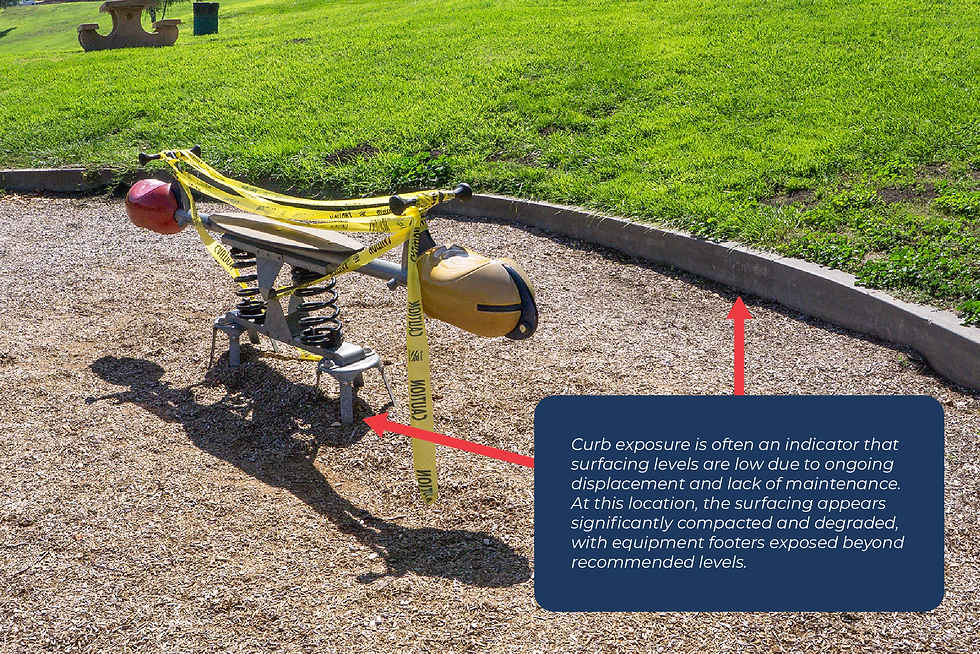
If the surface looks thin, displaced, or compacted, it’s not doing its job. Even compliant materials need maintenance to perform properly
Check for Broken or Missing Equipment
This one seems obvious, but it’s often overlooked.
Walk the structure and look for:
Broken plastic or cracked components
Missing caps, covers, or hardware
Rusted or loose connections
Sharp edges or exposed metal
Once something breaks, it can quickly become a problem.
Look at How Kids Are Actually Using It
This is one of the most telling indicators.
If kids are:
Climbing on things not intended for climbing
Jumping from areas that seem too high
Using landscaping, walls, or borders as play features
That tells you something about how the space functions in real life—not just how it was designed.
Playgrounds should anticipate “reasonable foreseeable use,” not just intended use.

There should be clear signage indicating the intended age group.
Why this matters:
Equipment for older kids often has higher access points and fall heights
Younger children are more vulnerable to entrapment and fall risks
If there’s no signage—or it’s ignored—it increases the chance of mismatched use.
Watch for Common Hazards You Can Spot Quickly
You don’t need a checklist memorized—just keep an eye out for these:
Entrapment hazards (harder to spot, but not impossible)
Openings where a child’s body could pass but head might not
Gaps between 3.5"–9" are a known concern area
Entanglement hazards
Protruding bolts, open hooks, or anything that could catch clothing
Ropes, strings, or tied items on equipment
These types of hazards are associated with some of the most serious outcomes and are specifically addressed in standards
Trip hazards
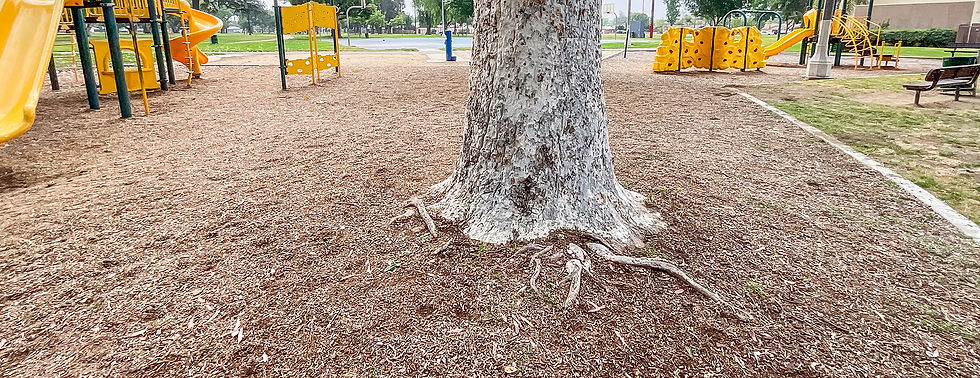
Roots, rocks, edging, or sudden surface changes
Displaced surfacing around high-use areas (slides, swings, rotating and upper body equipment.)
Poor maintenance overall
Debris (glass, trash, sharp objects, graffiti)
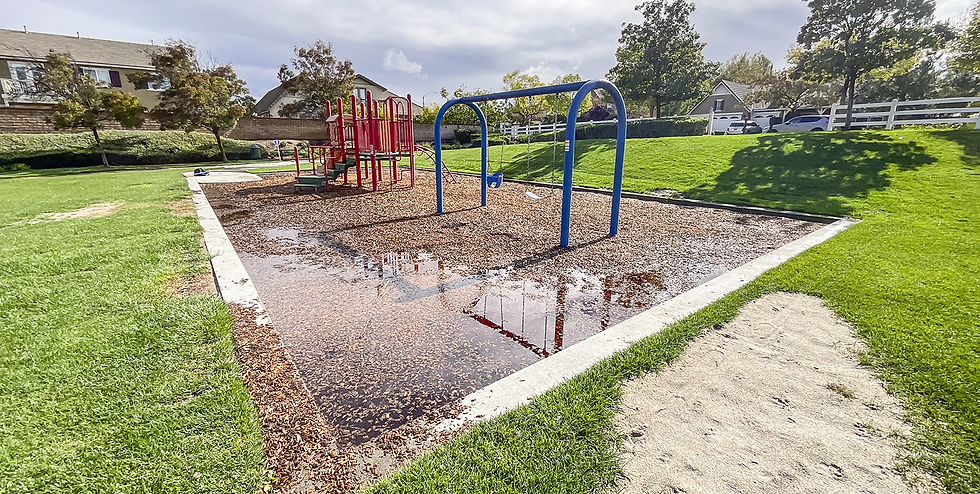
Standing water or drainage issues
Faded or missing safety signage
A well-maintained playground is usually obvious. So is a neglected one.
Quick Environmental Check
Take a step back and look at the surroundings:
Is the playground too close to traffic without a barrier?
Is there fencing where it would reasonably be expected?
Can you easily supervise your child from where you’re standing?
These aren’t always “violations,” but they matter for real-world use.
A Quick Reality Check
Even if everything looks right, injuries can still happen.
Standards and guidelines are designed to reduce the likelihood and severity of injury, not eliminate it. Even compliant surfacing and equipment cannot prevent all injuries.
That’s not a flaw—it’s the nature of play.
The goal is development through managed risk.
If Something Feels Off—Say Something
If you notice something that doesn’t sit right:
Contact the city, school, HOA, property manager, church director, etc. and send photo documentation of what you saw.
Be specific about the concern (surfacing, broken equipment, etc.)
Most issues come down to maintenance.
Key Takeaway
You don’t need to overanalyze every playground visit.
Just take 30–60 seconds:
Look at the surface
Scan the equipment
Watch how kids are using it
That quick check can catch a large percentage of real-world hazards.